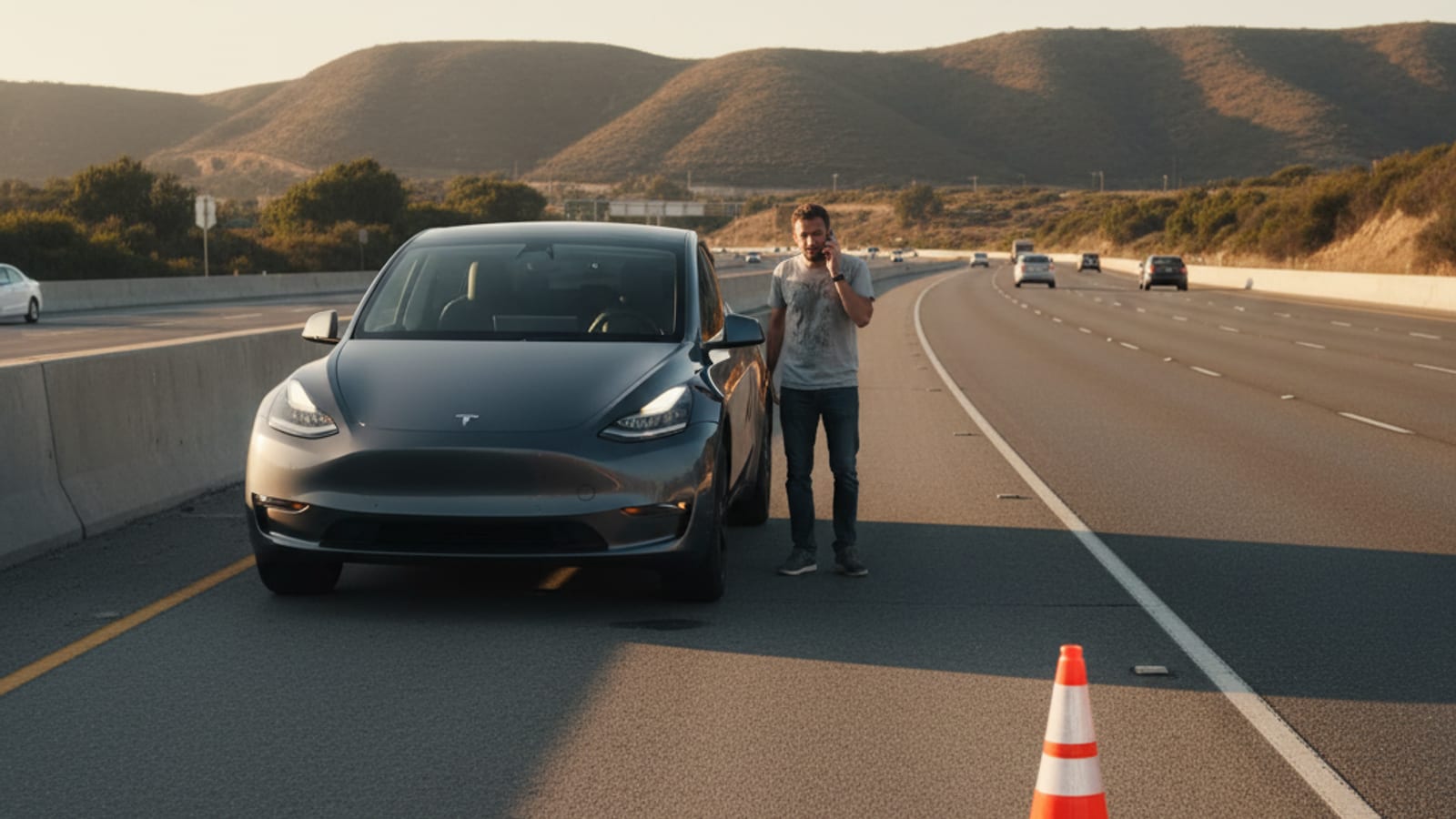
Correction, September 12, 2026: An earlier version of this article reported 847 stranded-EV freeway incidents in Q1 2026, a 34% increase, corridor percentages, vehicle-model shares, response times, and causes. We could not verify those figures in the Caltrans source the article cited, so we have withdrawn them.
The earlier article linked to the Caltrans District 11 homepage and described it as the location of quarterly operations reports supporting the story. Our review found that the cited page is a district landing page with project, travel, program, and news links. It did not provide the claimed quarterly stranded-EV table.
We also ran bounded searches for the stated report and figures and did not find a primary Caltrans or CHP source that substantiated them. That does not prove that no related internal data or report could exist. It means Charge Pro SD cannot responsibly present the earlier numbers as verified public Caltrans data.
What we withdrew
The unsupported material included:
- the total of 847 incidents and the stated 2024, 2025, and 2026 comparisons;
- the 34% growth claim;
- corridor shares and “hotspot” rankings for I-5, I-8, and other routes;
- vehicle-model and registration shares;
- explanations attributing incidents to particular vehicles, driver experience, charger density, elevation, or weather;
- CHP, towing, and Charge Pro response-time averages; and
- statements about Charge Pro coverage patterns or coordination with public agencies.
Those claims were central to the original article, so a small footnote would not have been enough. This corrected page preserves the URL and publication history while replacing the unsupported report with the official resources a stranded driver can actually use.
Official resources for a disabled EV on a San Diego freeway
Call 911 for a dangerous location
The California Highway Patrol FAQ says to call 911 when a disabled vehicle is in a traffic lane or another dangerous location. That is the clearest official instruction for an immediate roadway hazard.
The safe choice about whether to remain in or leave the vehicle depends on the scene. Follow 911 or CHP instructions rather than relying on a universal online rule.
Use 511 for other metropolitan-area roadside requests
For a breakdown outside that immediate-danger situation, CHP says motorists in metropolitan areas can call 511 and say “Roadside Assistance” to be connected with an operator who can help obtain appropriate roadside assistance.
Know what Freeway Service Patrol does
Confirm live on the CHP Freeway Service Patrol page. CHP describes designated routes and operating periods. If the vehicle cannot be restarted, an approved drop location may be used, not a chosen private shop or residence. The CHP page does not state that FSP provides mobile EV charging. Do not assume a patrol truck can add driving charge to a depleted traction battery.
Check current conditions through Caltrans
The Caltrans District 11 page links to QuickMap, live traffic cameras, lane closures, and current highway conditions. These tools can help a driver or person assisting them describe the location and understand active closures or incidents. They are live travel resources, not evidence for the withdrawn quarterly statistics.
What to report when requesting EV roadside help
Once any immediate danger has been reported to 911, useful details for a roadside request include:
- freeway and direction of travel;
- nearest exit, sign, call box, or visible landmark;
- whether the EV is fully outside the traffic lanes;
- vehicle make, model, and model year;
- dashboard messages and displayed state of charge;
- whether the vehicle powers on and can shift; and
- a callback number.
These details help distinguish a depleted high-voltage battery from a low-voltage or mechanical problem. They also let an independent operator check vehicle and connector compatibility before proposing a service.
About Charge Pro SD
Charge Pro SD is a referral service serving San Diego County. It connects drivers with independent local EV charging professionals; it does not operate a fleet, set operator prices, promise arrival times, or guarantee a particular charging result.
If the vehicle is safely out of traffic and you want to ask about mobile charging, call (858) 400-4465. Leave the location and vehicle details above. The independent operator should confirm availability, equipment compatibility, proposed service, price, and timing for the specific request.
You can also review our EV roadside assistance page and freeway breakdown guide.
FAQ
Does Caltrans publish the 847-incident Q1 2026 figure?
We could not verify that figure in the Caltrans District 11 page cited by the original article or in the bounded searches completed for this correction. We therefore withdrew it.
Are I-5 north of Carlsbad and I-8 east of El Cajon verified stranded-EV hotspots?
We did not find a cited primary table supporting the percentages or hotspot labels previously published here. Those claims have been withdrawn.
Does Freeway Service Patrol charge depleted EVs?
The official CHP FSP page does not state that FSP provides mobile high-voltage EV charging. If the vehicle cannot be restarted, an approved drop location may be used, not a chosen private shop or residence.
Where should a driver check current freeway conditions?
Use Caltrans QuickMap, current highway conditions, lane-closure information, or live traffic cameras linked from the District 11 page. Call 911 when the disabled vehicle is in a traffic lane or another dangerous location.
Correction record: The original article was published April 16, 2026. Charge Pro SD replaced its unsupported statistical report on September 12, 2026 after the cited District 11 page and exact searches did not verify the figures. The correction is intentionally limited to what our source review establishes.